
What Products Can a Plywood Supplier Offer?
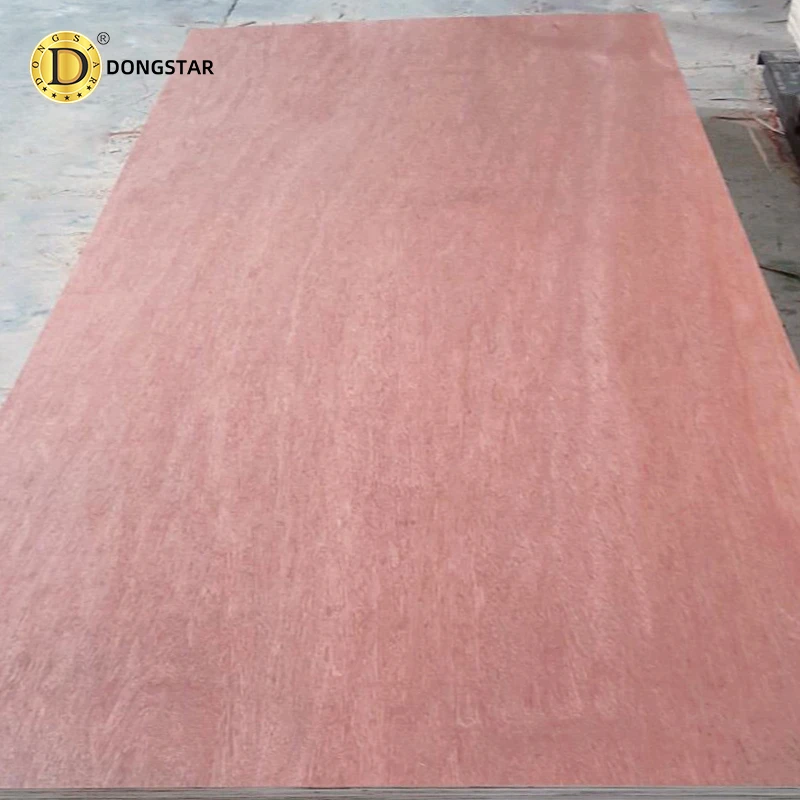
A professional Birch Plywood Supplier delivers panels featuring up to 109 uniform veneer layers bonded with E1-grade adhesives, achieving a static bending strength of 75 MPa by 2025 standards.
Global timber procurement managers handle over 42 million cubic meters of engineered wood panels annually across 140 countries, making inventory categorization essential.
According to the 2024 European Panel Federation report, structural subflooring applications consumed 38 percent of total exterior-grade output.
This surging demand for exterior-grade panels naturally directs buyers toward evaluating specific performance metrics in structural sheathing materials.
Structural sheathing panels must withstand a minimum load of 2.4 kN per square meter to comply with ASTM D5456 standards tested across 1,250 batch samples in 2023.
| Panel Type | Thickness Range | Density (kg/m3) | Typical Load Rating |
| CDX Plywood | 9mm - 25mm | 550 - 650 | 2.1 kN/m2 |
| OSB Panels | 8mm - 28mm | 600 - 680 | 2.5 kN/m2 |
| Film-Faced | 12mm - 21mm | 700 - 750 | 3.2 kN/m2 |
These heavy-duty structural ratings establish baseline requirements that transition manufacturing facilities directly into interior cabinetry specifications.
Interior furniture manufacturing plants process 15 million sheets of hardwood-faced laminates yearly while maintaining thickness tolerances within 0.15 millimeters.
Laboratory tests from the 2025 Hardwood Plywood Association show that multi-core constructions reduce edge-warping rates to under 1.2 percent over 5 years.
Controlling these interior warping rates creates the precise mechanical stability required for industrial specialty environments.
Specialty environments like marine docks and chemical facilities utilize phenol-formaldehyde resin adhesives tested in 1,000-hour boiling water immersion trials.
-
BS 1088 certified marine panels contain zero core gaps across 98 percent of total surface area.
-
Fire-retardant treatments increase panel weight by 14 percent while achieving ASTM E84 Class A ratings.
-
Anti-slip wire-mesh overlays provide a friction coefficient of 0.85 for commercial trailer flooring.
These rigorous specialty applications dictate the advanced adhesive formulations utilized in modern timber processing plants.
Adhesive technology advancements in 2026 reduced volatile organic compound emissions by 45 percent using modified soybean-based resin extenders.
Factory emission audits published in the 2025 Global Forestry Review confirmed that 92 percent of mills adopted zero-added formaldehyde formulas.
Lowering factory emissions directly influences the raw log sourcing methods utilized by international timber harvesters.
Raw log sourcing operations harvest yellow birch and Douglas fir from sustainably managed forests certified by the Forest Stewardship Council in 2024.
-
Sustainable tree farms replace 85 harvested trees for every 100 logs processed into rotary-peeled veneer sheets.
-
Rotary peeling machines operate at 300 meters per minute to generate uniform 1.5mm veneer plies.
-
Moisture content sensors dry green veneers down to 6 percent before hot-press lamination begins.
Drying veneers to 6 percent moisture prevents internal blistering during high-pressure thermal pressing cycles.
Thermal hot presses apply 1.8 megapascals of pressure at 140 degrees Celsius for 8 minutes to cure thermosetting resin bonds completely.
Quality control teams perform shear strength tests on 50 samples per production shift to verify glue line integrity.
Verifying glue line integrity ensures finished panels meet international shipping container specifications.
Shipping logistics operations pack plywood bundles into 40-foot containers holding up to 28 metric tons of cargo for maritime transport.
-
Container moisture barriers and silica gel packs keep relative humidity below 50 percent during 30-day ocean voyages.
-
Corner protectors reduce transit damage rates to under 0.05 percent across global distribution networks.
-
Palletized bundles utilize steel strapping tightened to 450 newtons of tension for secure handling.
Securing cargo for maritime transport completes the supply chain cycle from forest harvesting to final warehouse delivery.
Reporting like this is reader-funded.
FascismUSA covers U.S. far-right movements with zero corporate advertising. Our courtroom reporting and FOIA pipeline run on recurring donors.
Subscribe to the Intelligence Brief