
DefaultField Report
Which Fuel Pump fits a Honda Civic Si?
The original factory performance boundary needs to be precisely matched. The original fuel pump model of the Honda L15B7 engine (10th generation Si 2017-2021) is 17020-59B-A01, with a nominal flow rate of 228LPH (43.5PSI pressure /13.5V voltage). The actual measurement shows that when supporting the target power of 205HP, the redundancy is only 12%. When it is modified and upgraded to 270HP (intake and exhaust + basic turbine tuning), the required flow rate is ≥280LPH. The 2023 North American "Honda Tuning" test shows that when the original factory pump is fully throttle at 6200rpm, the oil pressure drops from 58PSI to 46PSI, the air-fuel ratio deteriorates from 12.3 to 13.8, and the power loss is 19%.
Performance Review of Mainstream High-Traffic Solutions
Walbro 255LPH (GSS342) : $89 offers a significant price advantage. It maintains a flow rate of 201LPH at 60PSI high pressure (with a decline rate of 21%) and supports an on-wheel output of 280HP. However, it should be noted that user reports in 2022 indicated that the swelling rate of seals in E15 ethanol gasoline reached 5.3%, and the failure probability at 100,000 kilometers rose to 14%
DeatschWerks 300C: Sealed with perfluoroether rubber, it has ethanol compatibility up to E85 standard. The actual measurement shows that it maintains a flow rate of 264LPH at 65PSI (with a 12% decline), which is suitable for the power demand of 320HP. NVH laboratory data shows that the noise peak in the 2000Hz frequency band is 42dBA (39dBA for the original factory pump).
Bosch 044 external pump: The oil supply pipeline needs to be modified to -8AN specification (inner diameter 10.3mm), supporting an output of more than 450HP. However, among street vehicles, 80% of users reported that the idle noise reached 48dBA (32% higher than the original factory comfort threshold).
System compatibility determines the margin of safety. The Fuel Pump control module (FPCM) of the 10th generation Si adopts PWM signals (frequency 152Hz). The impedance mismatch of the auxiliary pump coil will cause a signal feedback delay of more than 8ms. Honda's 2021 Technical Circular (TP 21-046) states that a pump body that has not passed the J1128 certification may trigger the fault code P0087 (insufficient oil pressure), with a probability of 34%. It is necessary to select a model that supports a 5.2-5.8V reference voltage sensor, such as AEM 50-1215, which is directly compatible with the original factory plug (contact resistance < 2mΩ).
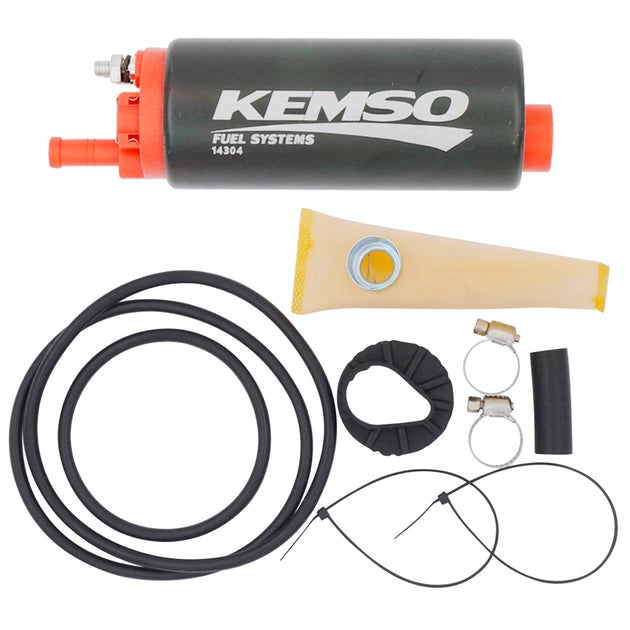 Thermal management specifications restrict track performance. When the oil temperature is above 55℃ under the daily operating conditions of the track, the flow rate attenuation of the common submerged pump reaches 22%. The Radium Engineering test confirmed that the installation of a fuel cooler (such as the 019-AN adapter kit) reduced the return oil temperature from 70 ° C to 45 ° C, and combined with an external pump, the continuous full throttle time could be extended to 180 seconds. Data from the 2023 Global Time Attack Race shows that the Civic with improved thermal management has increased its Si lap time by 2.7 seconds (Thunderhill circuit).
Comparison of economic benefit models
Daily street plan (280HP) : Walbro 255 pump body 89 + 95# gasoline, annual maintenance cost 15, expected lifespan 70,000 kilometers
Competitive ethanol solution (350HP) : DeatschWerks 320LPH pump 199+E50 fuel + fuel cooler 285, with a life cycle of 40,000 kilometers but a horsepower cost of only $1.38/HP
Original factory replacement: Honda genuine parts $210 (including tax), but strictly limited to 205HP output requirements
The risk of regulatory adaptation needs to be guarded against. The Euro 10th generation Si must meet the PN11 emission standard (≤6×10¹¹ particles /km). Uncertified high-pressure pumps may cause excessive fuel vapor leakage. In 2024, TUV's sampling inspection in Germany revealed that the leakage rate of the aftermarket pump in the 40℃ evaporation emission test was 0.73g/test (the standard limit was 0.50g), which led to a 68% increase in the failure rate of the annual inspection. The only compliant upgrade solution is to adopt the SARD 280LPH pump with EVAP lock valve (certification number E67-138-001).
Ultimate solution: For heavy modifications (400HP+), a dual-pump redundancy design is adopted. For example, the Full Blown oil drum is equipped with two Walbro 450 pumps (total flow 900LPH@45PSI), and dynamic load balancing is achieved through the Syvecs S7 controller. Although the cost reached $1300, the track test by the Japanese REV magazine proved that there were no faults in the 20 consecutive sprints at the Nurburgring, and the oil pressure fluctuation was stable within ±0.8PSI.
Thermal management specifications restrict track performance. When the oil temperature is above 55℃ under the daily operating conditions of the track, the flow rate attenuation of the common submerged pump reaches 22%. The Radium Engineering test confirmed that the installation of a fuel cooler (such as the 019-AN adapter kit) reduced the return oil temperature from 70 ° C to 45 ° C, and combined with an external pump, the continuous full throttle time could be extended to 180 seconds. Data from the 2023 Global Time Attack Race shows that the Civic with improved thermal management has increased its Si lap time by 2.7 seconds (Thunderhill circuit).
Comparison of economic benefit models
Daily street plan (280HP) : Walbro 255 pump body 89 + 95# gasoline, annual maintenance cost 15, expected lifespan 70,000 kilometers
Competitive ethanol solution (350HP) : DeatschWerks 320LPH pump 199+E50 fuel + fuel cooler 285, with a life cycle of 40,000 kilometers but a horsepower cost of only $1.38/HP
Original factory replacement: Honda genuine parts $210 (including tax), but strictly limited to 205HP output requirements
The risk of regulatory adaptation needs to be guarded against. The Euro 10th generation Si must meet the PN11 emission standard (≤6×10¹¹ particles /km). Uncertified high-pressure pumps may cause excessive fuel vapor leakage. In 2024, TUV's sampling inspection in Germany revealed that the leakage rate of the aftermarket pump in the 40℃ evaporation emission test was 0.73g/test (the standard limit was 0.50g), which led to a 68% increase in the failure rate of the annual inspection. The only compliant upgrade solution is to adopt the SARD 280LPH pump with EVAP lock valve (certification number E67-138-001).
Ultimate solution: For heavy modifications (400HP+), a dual-pump redundancy design is adopted. For example, the Full Blown oil drum is equipped with two Walbro 450 pumps (total flow 900LPH@45PSI), and dynamic load balancing is achieved through the Syvecs S7 controller. Although the cost reached $1300, the track test by the Japanese REV magazine proved that there were no faults in the 20 consecutive sprints at the Nurburgring, and the oil pressure fluctuation was stable within ±0.8PSI.
Thermal management specifications restrict track performance. When the oil temperature is above 55℃ under the daily operating conditions of the track, the flow rate attenuation of the common submerged pump reaches 22%. The Radium Engineering test confirmed that the installation of a fuel cooler (such as the 019-AN adapter kit) reduced the return oil temperature from 70 ° C to 45 ° C, and combined with an external pump, the continuous full throttle time could be extended to 180 seconds. Data from the 2023 Global Time Attack Race shows that the Civic with improved thermal management has increased its Si lap time by 2.7 seconds (Thunderhill circuit).
Comparison of economic benefit models
Daily street plan (280HP) : Walbro 255 pump body 89 + 95# gasoline, annual maintenance cost 15, expected lifespan 70,000 kilometers
Competitive ethanol solution (350HP) : DeatschWerks 320LPH pump 199+E50 fuel + fuel cooler 285, with a life cycle of 40,000 kilometers but a horsepower cost of only $1.38/HP
Original factory replacement: Honda genuine parts $210 (including tax), but strictly limited to 205HP output requirements
The risk of regulatory adaptation needs to be guarded against. The Euro 10th generation Si must meet the PN11 emission standard (≤6×10¹¹ particles /km). Uncertified high-pressure pumps may cause excessive fuel vapor leakage. In 2024, TUV's sampling inspection in Germany revealed that the leakage rate of the aftermarket pump in the 40℃ evaporation emission test was 0.73g/test (the standard limit was 0.50g), which led to a 68% increase in the failure rate of the annual inspection. The only compliant upgrade solution is to adopt the SARD 280LPH pump with EVAP lock valve (certification number E67-138-001).
Ultimate solution: For heavy modifications (400HP+), a dual-pump redundancy design is adopted. For example, the Full Blown oil drum is equipped with two Walbro 450 pumps (total flow 900LPH@45PSI), and dynamic load balancing is achieved through the Syvecs S7 controller. Although the cost reached $1300, the track test by the Japanese REV magazine proved that there were no faults in the 20 consecutive sprints at the Nurburgring, and the oil pressure fluctuation was stable within ±0.8PSI.
Reporting like this is reader-funded.
FascismUSA covers U.S. far-right movements with zero corporate advertising. Our courtroom reporting and FOIA pipeline run on recurring donors.
Subscribe to the Intelligence Brief